

The European Central Bank governing council convenes Wednesday in Frankfurt to evaluate monetary policy amid escalating Middle Eastern geopolitical tensions that have triggered substantial oil market volatility, presenting critical challenges for eurozone economies including Ireland’s export-dependent business sector.
Wednesday’s monetary policy deliberations mark the first formal opportunity for ECB policymakers to comprehensively examine economic ramifications stemming from military conflict in the Middle East, which has generated pronounced fluctuations in global energy markets. Oil price movements remain particularly consequential for Irish businesses, where manufacturing, logistics and aviation sectors maintain significant exposure to petroleum-based input costs that directly influence operational margins and competitive positioning.
The governing council faces complex analytical demands as it balances persistent inflationary pressures against emerging recessionary signals across European markets. For Ireland’s economy, which demonstrated resilient GDP growth exceeding eurozone averages throughout recent quarters, the ECB’s policy stance carries material implications for borrowing costs affecting commercial property investments, business expansion financing and working capital facilities that underpin enterprise activity nationwide.
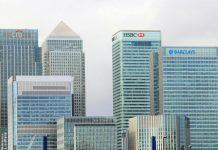
Irish financial institutions operating within the International Financial Services Centre have maintained close monitoring of ECB communications, recognising that interest rate trajectories directly influence funding costs, mortgage lending volumes and corporate banking profitability. The Central Bank of Ireland continues coordinating with European monetary authorities to ensure domestic banking stability amid evolving economic conditions that present both headwinds and opportunities for Ireland’s sophisticated financial services ecosystem.
Energy security concerns have intensified across European capitals as Middle Eastern instability threatens established supply chain arrangements. Ireland’s business community faces particular vulnerability given the nation’s peripheral geographic position and historical dependence on imported fossil fuels, though recent renewable energy investments supported by Enterprise Ireland have strengthened indigenous energy resilience and reduced exposure to external price shocks.
Manufacturing enterprises throughout Ireland’s industrial heartlands have expressed heightened concern regarding input cost inflation, particularly in energy-intensive sectors including pharmaceuticals, data processing and food production. These industries represent substantial employment bases and export revenue generators, making their cost competitiveness essential to maintaining Ireland’s attractiveness as a European manufacturing destination.
The ECB’s assessment extends beyond immediate oil price volatility to encompass broader inflation expectations, wage growth dynamics and consumer confidence indicators that collectively shape monetary policy decisions. Ireland’s labour market tightness and sustained wage pressure in critical sectors such as technology, healthcare and construction present ongoing challenges for policymakers attempting to calibrate appropriate interest rate settings that neither stifle economic activity nor permit inflationary expectations to become entrenched.
Financial markets have demonstrated heightened sensitivity to central bank communications in recent weeks, with equity valuations, bond yields and currency exchange rates responding swiftly to perceived shifts in monetary policy stances. Irish pension funds, institutional investors and corporate treasury departments have intensified scenario planning efforts to prepare for various interest rate trajectories that could emerge from Wednesday’s governing council deliberations.
The geopolitical dimension adds considerable uncertainty to economic forecasting models, as military developments in the Middle East remain fluid and unpredictable. Irish export-oriented businesses maintain particular interest in regional stability given that several Middle Eastern nations represent growing markets for Irish food products, education services and technology solutions that have contributed to trade diversification efforts beyond traditional European markets.
As the ECB governing council convenes, Irish business leaders and economic policymakers will scrutinise both the formal policy decisions and accompanying forward guidance that shapes market expectations for coming months. The intersection of geopolitical risk, energy market volatility and monetary policy normalisation creates a challenging environment requiring sophisticated risk management and strategic agility from enterprises navigating this complex economic landscape.